
Inspired wanderings to Paris with Gerhard Richter
The New Year started for me with a visit to Paris to meet with German cousins and to see the Gerhard Richter exhibition at the Fondation Louis Vuitton.
I took the early train from St Pancras arriving in Paris for a late breakfast with my cousins in their elegant Rue La Fayette apartment. It was a wonderful crisp morning and Paris was in full swing.
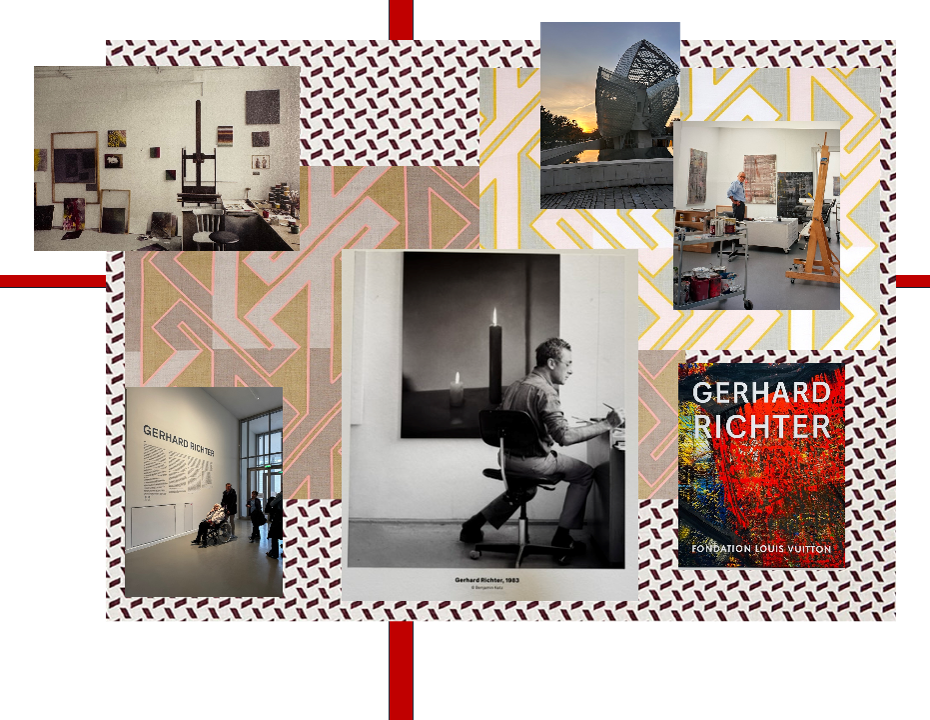
Gerhard Richter remains one of the giants of the contemporary art world, pushing boundaries well into his 90s and with his creativity not abating. The retrospective, chronologically running over all floors of the museum and curated by Nicholas Serota, was vast; it took us almost all day to view, broken up by delightful chats over tea and cake with my brave aunt. We steered her about in her wheelchair after she had traveled from the snowy Bavarian alps to visit the show, as she particularly loves Richter’s works. So it was exciting to view this together.
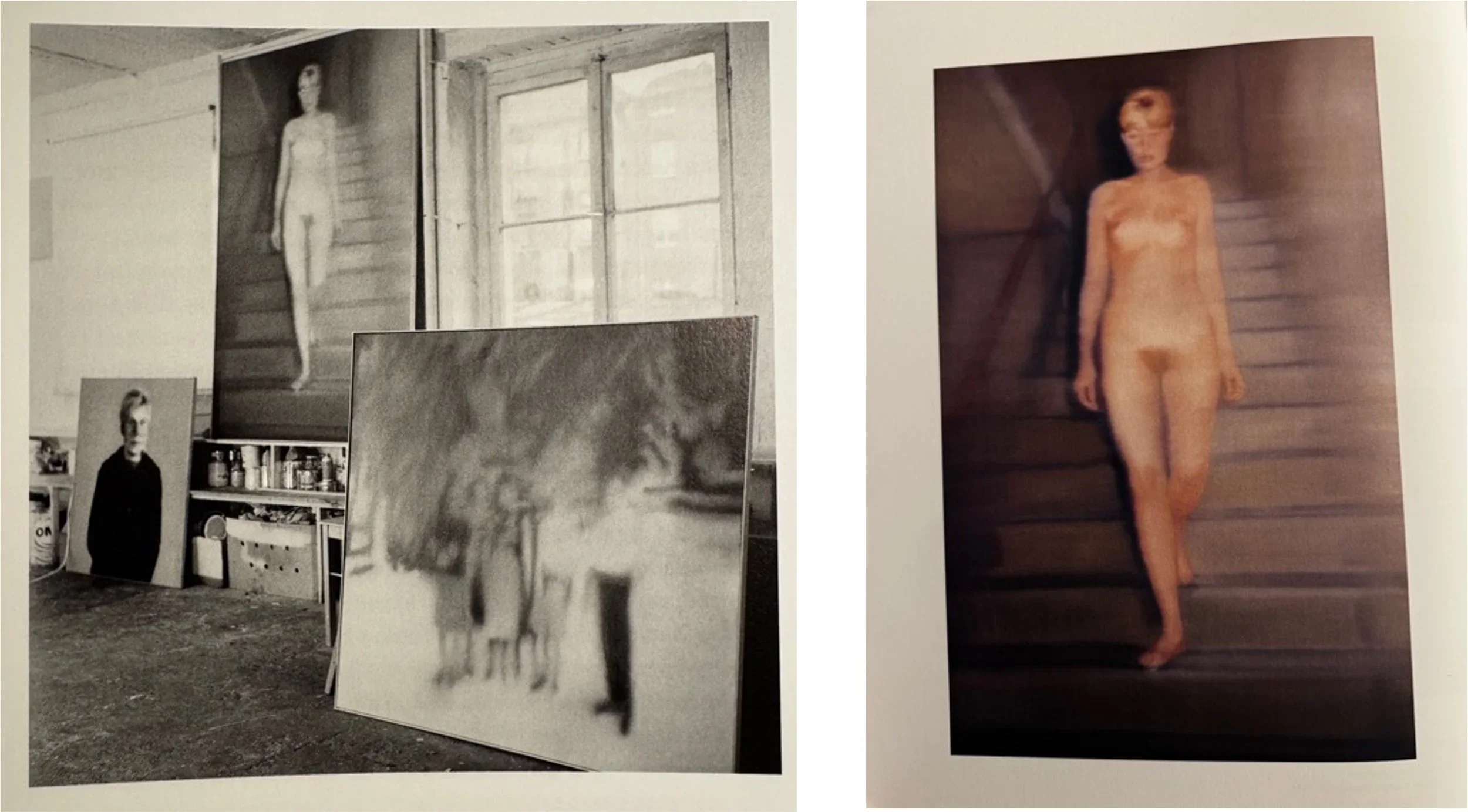
Born in Dresden in 1932, he left East Germany in 1961 for Dusseldorf Art school at the same time as Joseph Beuys (1921-1986) who was there as a Professor. He then moved to Cologne where he still lives. The painting of his wife Ema who came with him is one of the most striking images, naked descending the stairs.
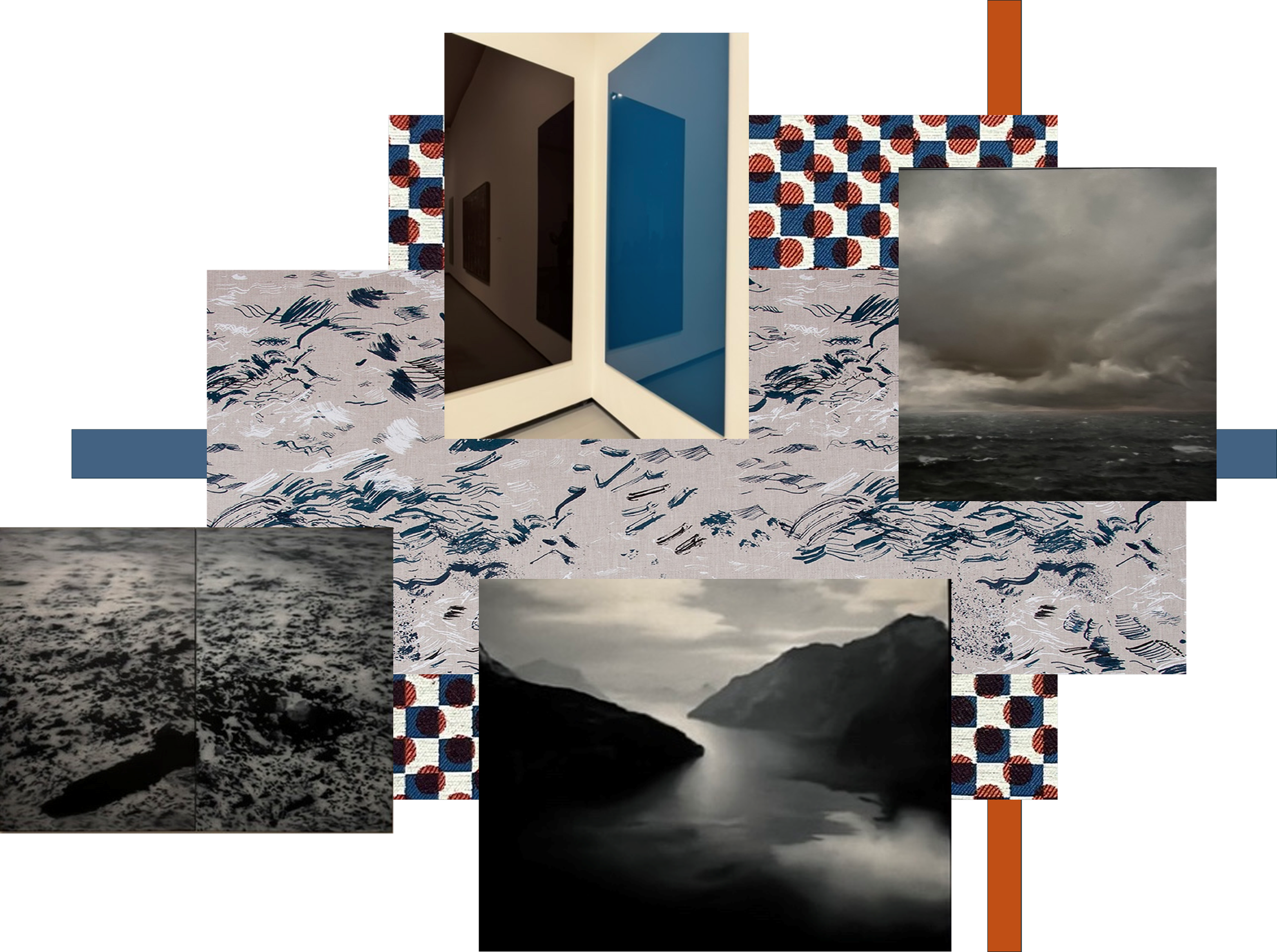
The names, images and works created by Richter and Beuys were very familiar to me. I grew up in Germany with my father running a modern museum in Bochum and my mother translating art catalogues for these same artists from German into the English Language. As children, we travelled to many exhibitions to see their work and their modernism seemed just right.
The incredible thing about Richter is how he always moves forward, embracing new mediums and giving us his very personal and subjective presentation of what is real to him. Much of his early work and again work in the 90s seems like photographic realism and yet none of it is executed in nature but is recreated from other mediums like photography, especially from newspapers. Some might ask why he seemingly copied photographs, but his works showed a ’super reality’, i.e. what is there and then adding more from imagination. This is very much in the German tradition of Romanticism as seen in Caspar David Friedrich’s work, to create an imagined world that appears to be realistic whilst not being this at all. The works are extremely subjective and evolve into vast colourful abstract expressionist works in the late 80s.
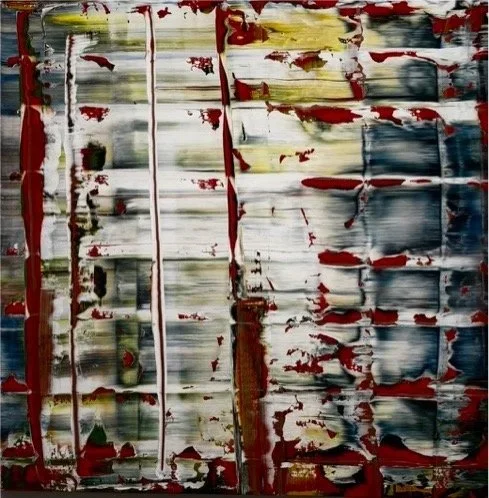
The paintings of 1999, the vast abstract colours washed, scraped back by steel beams feel physical and give you the feeling of hovering between the totally abstract and the shimmering image of something recognisable. The power used to make these paintings shines through and they are captivating.
The abstract nature of much of Richter's art output veils the intense personal subject matters that affect him, especially of living in East Germany after the 2nd World War and having lost family in the Birkenau camp. These paintings are part erasure and presentation. He says “I have nothing to say and I’m saying it”.
I loved the series of coloured mirrors and large blue grey mirror walls which reflect the space and yourself within it. I first experienced these at large scale at the DIA: Beacon, an old disused Nabisco factory on the vast Hudson River NY. Their clean simplicity and sheer scale has a mesmerising effect.
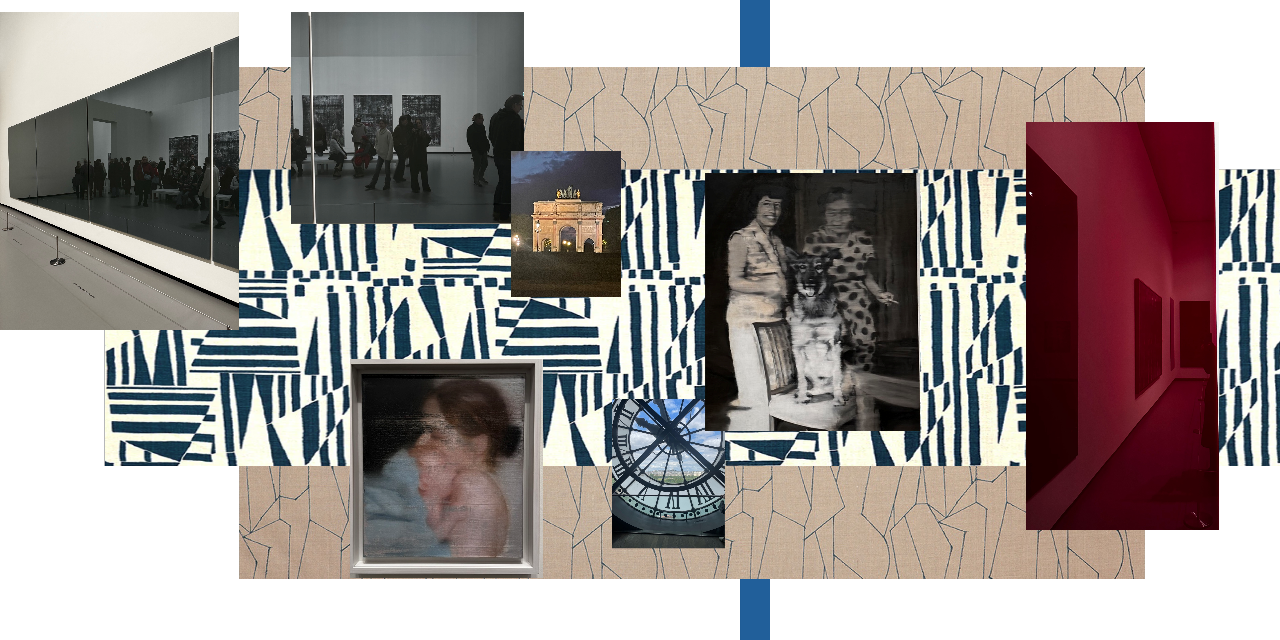
Another very personal series is the one looking at photographs of family in East Germany and then in 1995 of Sabine, his third wife, nursing their child. These paintings are almost classicist madonna and child images, full of depth and colour and gentle intimacy.
Richter put down the paint brush only a few years ago and now is prolific with wonderful pencil drawings and creating books.
When leaving the museum, the outside world had turned white and thick snow was falling. It was impossible to get a taxi that could get me to the Gare du Nord on time, so I skidded over icy roads and found the metro to take me there, weaving under the grid locked roads of Paris under snow. I made it to my train and was home by 8.30pm. A perfect day and a perfect start to the new year.